
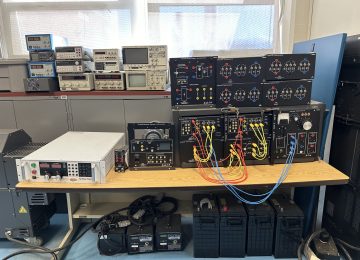

When it Comes to Advanced Control for Power Systems, We Lead the Way By Focusing On Enhancing Control Strategies
The field of “Advanced Control for Power Systems” is a cornerstone of the Center for Energy Systems and Control’s (CESAC) research endeavors. In this critical domain, CESAC focuses on enhancing control strategies for a diverse range of power systems, encompassing both naval and grid systems. The significance of this research area lies in its pivotal role in shaping the reliability, efficiency, and resilience of power generation, distribution, and utilization.
he comprehensive coverage of these research areas underscores their pivotal roles in ensuring the reliability, efficiency, and resilience of modern power systems. Advanced control strategies serve as the linchpin of power system adaptation, allowing them to navigate evolving challenges and technologies. Through our research, we fortify grid stability, advance energy sustainability, and protect critical infrastructure, thereby guaranteeing a dependable and robust energy future for all.
- Grid Stability Enhancement:
- Distributed Energy Resources (DER) Management:
- Smart Grid Integration:
- Microgrid Control:
- Naval Power Systems:
- Energy Storage Control:
- Voltage and Frequency Regulation
- Load Shedding and Restoration:
- Cybersecurity in Control Systems:
- Human-Machine Interaction:
OUR RESEARCH
Must comprehensively cover all these topics due to their pivotal roles in power system reliability, efficiency, and resilience. Advanced control strategies are the backbone of modern power systems, enabling them to adapt to new challenges and technologies. By addressing these areas, our research strengthens grid stability, enhances energy sustainability, and safeguards critical infrastructure, ensuring a reliable and resilient energy future for all.
Grid Stability Enhancement: CESC’s research in grid control is essential for maintaining the delicate balance of grid stability, especially as the integration of renewable energy sources accelerates. Advanced control strategies effectively manage power flows, voltage levels, and frequency regulation to ensure reliable energy delivery
Distributed Energy Resources (DER) Management: As DERs such as solar panels, wind turbines, and microgrids become increasingly prevalent, our research focuses on developing intelligent control systems to optimize their performance. These systems help reduce energy wastage, enhance grid resilience, and facilitate the seamless integration of distributed resources.
Smart Grid Integration: In the era of smart grids, our research addresses the complex challenges of monitoring, analyzing, and optimizing grid operations. Advanced control strategies empower smart grids to respond dynamically to changing conditions, minimize losses, and enhance overall grid efficiency.
Microgrid Control: Microgrids offer localized energy solutions and a lifeline during grid outages. CESC’s research delves into the development of advanced control systems that autonomously manage microgrid operations, ensuring continuous energy supply, even in emergencies.
Naval Power Systems: For naval applications, advanced control is indispensable for managing the intricate power systems aboard ships. Our research optimizes power distribution, reduces fuel consumption, and ensures the uninterrupted operation of mission-critical systems.
Energy Storage Control: Efficient control of energy storage systems, such as batteries, is central to balancing supply and demand, mitigating the intermittency of renewable energy sources, and bolstering grid resilience.
Voltage and Frequency Regulation: Precision in voltage and frequency control is paramount for maintaining power quality and grid stability, especially in the face of fluctuating loads and the integration of diverse energy sources.
Load Shedding and Restoration: Our research investigates advanced control strategies for swift load shedding during emergencies and systematic load restoration once stability is regained. These strategies are crucial for minimizing service disruptions.
Cybersecurity in Control Systems: In an increasingly interconnected world, safeguarding control systems against cyber threats is imperative. Our research is dedicated to fortifying power infrastructure against cyberattacks, ensuring the integrity and security of critical systems.
Human-Machine Interaction: To optimize decision-making and system response during critical events, our research explores the seamless interaction between control systems and human operators. This interdisciplinary approach enhances the adaptability and effectiveness of control strategies.